Click the icon below to explore our YouTube channel for practical lessons and ideas.

Breaking Barriers: Why Rural Indian Youth Struggle with English
English is often seen as the language of opportunity in India, opening doors to jobs, higher education, and global communication. Yet for millions of rural youth, learning English remains a distant dream. This blog explores the everyday challenges faced by rural students in India—poverty, teacher shortages, exam pressures, and cultural norms—and highlights practical solutions that can make English learning more inclusive and impactful. Click on the image for more...
YOUTH & CAREER SKILLSTEACHING & LEARNINGSKILL DEVELOPMENTEDUCATIONSTUDENT CHALLENGESLANGUAGE LEARNINGRURAL DEVELOPMENT & YOUTH EMPOWERMENTTEACHER TRAINING & RESOURCES
J R Nanda | EngQuest Hub
3/14/20262 min read
English has become more than just a subject in India—it is a passport to better opportunities. From government jobs to private sector employment, proficiency in English often decides who gets ahead. But for rural youth, especially those between 12 and 25 years old, learning English is a steep uphill climb.
The Reality in Rural Classrooms
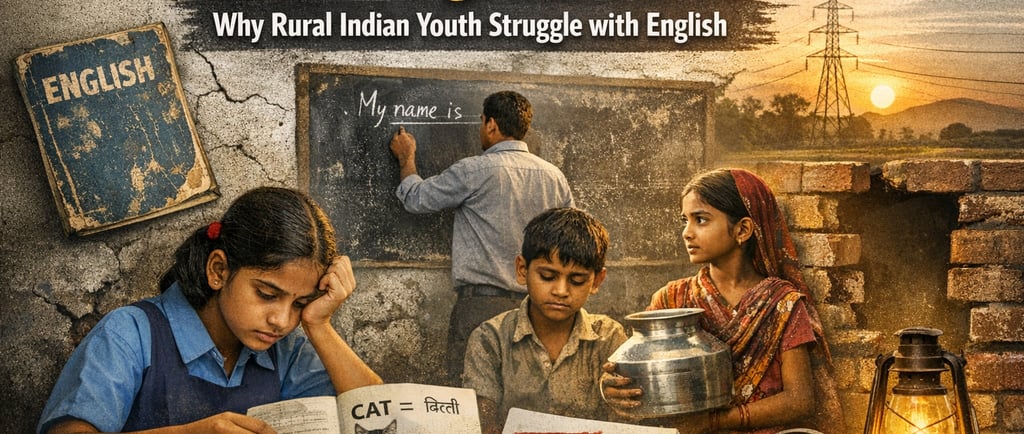
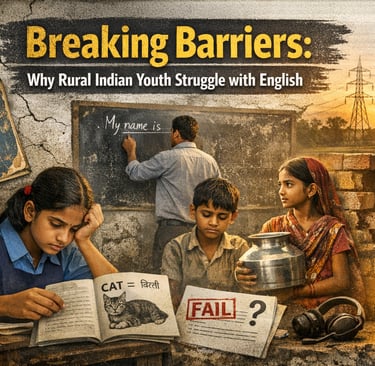
Walk into a village school in Madhya Pradesh or Bihar, and you’ll often find overcrowded classrooms with 40–60 students, one tired teacher juggling multiple subjects, and very few English textbooks. Many teachers themselves admit, “We don’t have good teachers in these rural areas”—a reality that leaves students dependent on rote learning rather than real communication skills. Without proper training or resources, English becomes a subject to memorize, not a language to live.
Poverty and Social Pressures
For rural families, survival often takes priority over schooling. Parents may pull children out of class to help on farms or send them to work. Girls, in particular, face cultural expectations of early marriage or household duties, leaving little room for education. One Bangladeshi study noted that rural parents “could not afford private tuition; their son/daughter was often first in family to go to school,” meaning no support at home for English learning. This mirrors the Indian reality where private coaching is a luxury only urban students can afford.
Exam-Oriented Learning
India’s education system places heavy emphasis on board exams. Rural teachers, under pressure to meet pass rates, often “teach to the test.” Instead of encouraging students to speak or write creatively in English, they drill model answers. This exam culture leaves rural youth with certificates but little confidence to use English outside the classroom.
Language Exposure Gap
Urban children hear English in movies, social media, and conversations at home. Rural children, however, “listen to English only when they are in school.” With local languages dominating village life, English feels alien and disconnected. Without exposure, even motivated students struggle to grasp its rhythm and usage.
What Can Be Done?
The challenges are real, but solutions exist:
Better Teacher Training & Incentives: Scholarships and hardship allowances can attract skilled teachers to rural postings.
Mother-Tongue Based Learning: Teaching in local languages first, then gradually introducing English, helps students build confidence.
Technology Access: Solar-powered tablets, offline apps, and radio lessons can bridge the gap where electricity and internet are scarce.
Community Engagement: Parents and village leaders must see English as a tool for empowerment, not a threat to culture.
Support Programs: School meals or small cash grants can keep children, especially girls, in classrooms longer.
A Path Forward
For rural India, English should not remain a privilege of the cities. It must become a bridge for empowerment, giving young people the confidence to dream beyond their village boundaries. As one teacher observed, rural students often “could never improve their [English] proficiency no matter which grade” they reached. Changing this narrative requires collective effort—government, NGOs, teachers, and communities working together.
If India wants its rural youth to thrive in a globalized world, English learning must move from being a distant aspiration to a lived reality.
👉 The below YouTube video link will take you to an illustration in Hindi, helping parents, teachers, and students understand these challenges and solutions in their own language.
